When Should You Rent Land Clearing Equipment?
A few acres of waist-high brush can look manageable until a walk-through reveals saplings, thorny vines, hidden stumps, wet ground, and fence wire under the growth. That is when it makes sense to rent land clearing equipment instead of sending crews out with handheld tools or buying a machine that may sit idle after the work is finished.
Renting gives property owners and contractors access to the right capability for the job without the purchase price, storage requirements, maintenance responsibility, and transport burden of ownership. The key is matching the machine, attachment, and rental period to actual site conditions - not just acreage.
Start With the Material You Need to Clear
Land clearing is not one task. Light grass and weeds, dense brush, small trees, storm debris, invasive vegetation, and mature timber all require different approaches. A machine that handles overgrown pasture efficiently may not be the right answer for a wooded home site or a utility right-of-way.
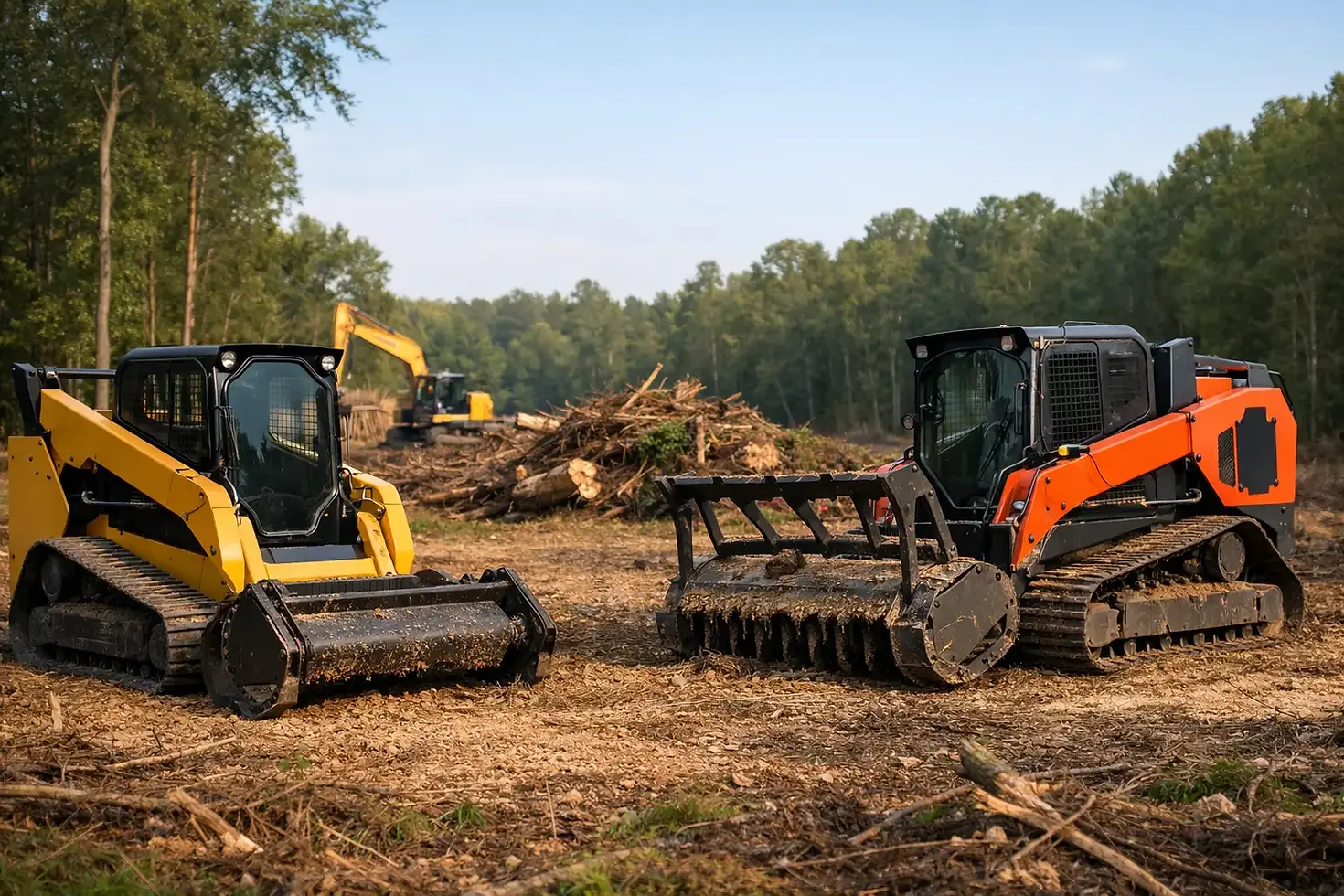
For thick brush, vines, and small-diameter trees, a compact track loader or skid steer with a forestry mulcher can be a productive choice. The mulcher cuts and processes vegetation into mulch across the ground, reducing the need to pile, haul, or burn debris. This is often a practical option for reclaiming lots, improving trails, maintaining fence lines, and clearing overgrown edges.
For heavier timber, root removal, grading, or site preparation after vegetation is down, an excavator, dozer, or dedicated forestry machine may be more appropriate. These jobs can involve larger trees, uneven terrain, buried material, and a plan for stumps and debris that mulching alone will not solve.
Before choosing equipment, identify the largest material on site, estimate density, and decide what the finished ground needs to look like. If the goal is simply access and vegetation control, mulching may be enough. If the goal is a building pad, road, pasture conversion, or utility installation, plan for follow-up earthwork as well.
When Renting Is Better Than Buying
Ownership makes sense for companies that run specialized equipment consistently and have the operators, shop support, storage, and transport capacity to keep it working. For many projects, however, rental is the stronger business decision.
Renting is especially useful when a project has a defined start and finish, when work volume is seasonal, or when the machine needed is too specialized to justify a purchase. A general contractor may need a mulcher for one site before excavation begins. A ranch operator may need a machine for several days of fence-line clearing. A municipality may need extra capacity after a storm. In each case, renting keeps capital available for the rest of the job.
It also lets experienced operators match equipment to changing conditions. A compact machine may be the efficient choice for a tight residential lot, while a larger carrier makes more sense on open acreage with dense vegetation. Renting avoids forcing one owned machine into every application.
Choose the Right Machine and Attachment
The carrier matters, but the attachment often determines production. Horsepower, hydraulic flow, operating weight, track condition, and guarding all affect how a machine performs in brush and timber. A forestry mulcher needs the correct hydraulic capacity. A brush cutter may be suited to lighter material but can be damaged or slowed by trees beyond its intended cutting range.
Discuss the work in direct terms before reserving a unit: acreage, terrain, material size, slope, access points, ground conditions, and disposal requirements. Photos and video can help a rental provider identify whether a skid steer, compact track loader, excavator, or purpose-built forestry machine is the better fit.
A few equipment choices commonly come up on clearing jobs:
Forestry mulchers process brush, vines, and many small trees into ground cover without creating large burn or haul-off piles.
Brush cutters are useful for grass, weeds, and lighter woody growth where finish quality and speed matter more than processing larger timber.
Excavators with grapples, thumbs, or mulching heads handle selective tree work, debris handling, slopes, and material that needs to be moved.
Dozers and dedicated sitework equipment are often needed when the project includes pushing, grading, road building, or rough shaping after clearing.
Do not select by machine size alone. Bigger equipment can increase production in open ground, but it can also be harder to transport, less maneuverable around structures, and more likely to damage finished areas. The right rental setup is the one that clears the work safely at the required pace.
Plan Transport, Access, and Rental Time
A rental rate is only one part of the project cost. Delivery, pickup, fuel, operator time, attachments, insurance requirements, and downtime all affect the final number. Account for them before the equipment arrives.
Check access first. Can a delivery truck enter the property, turn around, and unload safely? Is there a bridge, soft driveway, narrow gate, steep entrance, or low utility line that limits the machine or trailer? A productive machine does not help if it cannot reach the work area.
Then set a realistic rental period. New customers often estimate only the time the machine is actively cutting. Clearing work also includes site setup, fueling, daily inspections, moving between work zones, dealing with hidden debris, and weather delays. If the job is time-sensitive, build in a margin rather than planning around the best-case production rate.
Fuel planning matters on forestry and land-clearing equipment. High-demand attachments consume fuel quickly under load. Establish where fuel will be stored, who will handle daily service, and how spills will be prevented. Keep the machine on stable ground for fueling and perform required checks before each shift.
Know What Is Below and Around the Vegetation
Brush hides hazards. Before work begins, walk the property and mark known obstacles, including utilities, wells, septic components, culverts, irrigation lines, old fencing, structures, rock piles, and property boundaries. Contact the appropriate utility locating service before digging, grading, or working near underground lines.
Fence wire, cable, chain, and discarded metal are particularly hard on mulching heads and brush-cutting attachments. They can wrap around rotating components, cause equipment damage, and create a serious safety hazard. Remove visible material where possible and stop work if hidden debris is found.
Slope and soil conditions deserve the same attention. Wet clay, loose fill, creek banks, and side slopes can change quickly under the weight of tracked equipment. Work from stable positions, avoid operating across slopes beyond the machine's safe limits, and do not assume tracks make every surface safe.
Decide Whether You Need an Operator or a Clearing Crew
Rental equipment is a strong option when you have a qualified operator who understands the machine, the attachment, and the work area. It is not always the best option when the project involves heavy timber, difficult terrain, unknown hazards, tight schedules, or a site that must meet a specific finish standard.
In those cases, hiring an experienced land-clearing or forestry mulching crew can reduce risk and keep the project moving. The crew brings the equipment, operator, transport plan, and jobsite experience together. This can be more economical than renting machinery, training an operator, and absorbing the cost of slow production or preventable damage.
Eco Care Rentals can help customers evaluate both paths: equipment access for qualified operators or field-service support when the job calls for an experienced crew. The right choice depends on the site, the deadline, and what your team is prepared to manage.
Get Clear Answers Before the Equipment Arrives
A good rental conversation should cover more than availability. Ask what attachment is included, what material it is rated to handle, whether the machine has forestry guarding, how delivery is scheduled, and what daily service is expected from the renter. Confirm damage responsibility, fuel requirements, and whether transport permits or site access restrictions could affect delivery.
Also ask about machine controls if the operator is unfamiliar with that model. A quick orientation can prevent lost production on day one. Qualified operators should review the manufacturer instructions, inspect the unit, test functions in a safe open area, and make sure all safety features are in place before entering dense vegetation.
The best time to arrange a rental is before brush becomes a schedule problem. Define the finish you need, provide an honest picture of site conditions, and reserve equipment sized for the actual work. That preparation turns an overgrown property into a manageable job instead of an expensive surprise.


Comments